Showing posts with label gamification. Show all posts

Monday, February 23, 2015

#Flipclass Flashblog: Deeper Learning w The Odyssey

February is Odyssey time for my students.  I have been teaching Homer's Odyssey for every year of my career, even during student teaching.  If there is a text to dive into deeply, this is it.  There are so many topics I cover with this epic.

To name a few...


  • Joseph Campbell's Hero Journey-- students analyze how both Odysseus and Telemachus undergo a heroic transformation
  • Oral storytelling techniques-- Trojan War Stories, Odysseus' guest-gift of the story of his journey to the Phaiakians
  • Persuasive techniques-- compare and contrast Telemachus' speech at the Assembly (Book 2) with Athena's request to Zeus during the Council of the Gods (Book 1).  
  • Societal Norms-- how literature teaches readers to behave in society and what happens when one doesn't behave (oh, those haughty suitors!)
  • Poetry Explications-- analyze contemporary poems inspired by the epic and write poetry explications

How I get students to dive deep into the Odyssey has changed over the years as I've tried different pedagogical approaches and infused educational technology tools. Last year was the first attempt at gamifying my instruction and, boy, did I get in over my head. While the delivery of the content and the tasks for completion were effective, I got swamped with managing "the game".  I had too many moving pieces and I couldn't effectively "level up" individual students. The content was organized in one Edmodo group with subtopics divided into small groups.  Students had to be manually added to the small groups when they were ready to level up.

Problem solving this with my colleagues in my Master of Arts in Instructional Technology cohort, Mr. Astin recommended automating the leveling up by using Google Forms and Flubaroo.  Rather than keeping all the content in one Edmodo group, Mr. Astin recommended having an Edmodo group for each topic, students complete the tasks, then take a mastery test on a Google Form with Flubaroo set to automatically score the test.  If students scored proficiently, they would receive an email with join URL for the next group.  I would get a notification stating that a student wanted to join the group and I could quickly see if they completed the previous group's tasks.  If so, I approved access; if not, I sent a message to the student that he/she needed to make sure all tasks were completed proficiently.

So far, this tweaked "game" design has worked very well!  I front loaded the content in each group and let students begin their epic quest to become an #OdysseyExpert.  Students are engaged, taking responsibility for their learning, and diving in deep.

My students have done some really cool things during our study of The Odyssey from tracking down on social media the actor who played Telemachus in the made for TV movie (and decorating t-shirts to honor said actor) to creating found poems to writing screenplays based on Trojan War stories to creating personal epithet Vokis to publishing projects on the #OdysseyExperts blog. There are so many things!


And if this evident of having an impact, one of my students from last year tweeted me on Valentine's Day with Telemachus themed cards she made! My favorite is the one on the right.


In addition to all this awesome deeper learning, I'm surreptitiously preparing my students for the PARCC -- they are using the exact digital literacy skills needed to be successful on the PARCC without me teaching to the test.  By the way, we begin PARCC testing on Monday. And my opinions on the PARCC are reserved for another blog post...

Thursday, March 27, 2014

GUEST POST: Team Tournaments HS Gamification Using Class Dojo


This is a guest post from Mrs. Marynn Dause, an English teacher at King George High School in King George, Virginia, who is using Class Dojo to gamify her class. I'm fascinated with gamification and using Edmodo to gamify my Odyssey unit, but Mrs. Dause's approach has got me thinking. Using Class Dojo, her method is something we all can learn from and with Class Dojo's BIG ANNOUNCEMENT, staying in contact with parents and students just got easier. Learning can and should be fun!


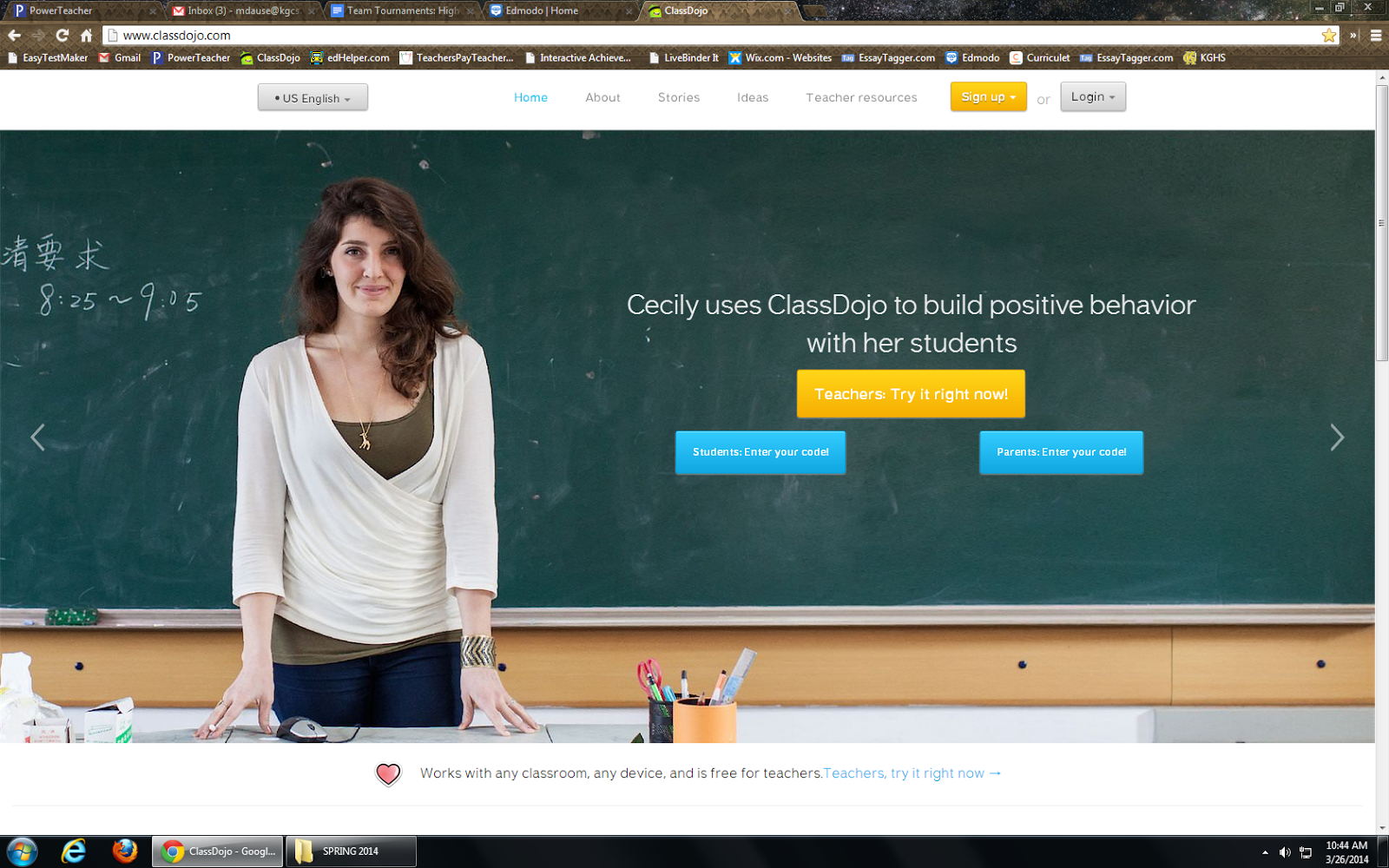
This year, I’ve experimented with what feels like a vast array of educational technology and strategies.  My goal was simple: find one or two things that work and stick with them.  The trouble is, there’s such a smorgasbord of awesome teaching tools and techniques that I couldn’t “just have one!”  I have, however, limited the scope of my in-class application down to a few favorites, and two of those are gamification and a lovely app called ClassDojo.  This free classroom management tool allows teachers to easily track student behaviors and actions in real-time from any web-enabled device, and it got me thinking: how can I use this data to create positive reinforcement in my classroom?  Could data translate to gamification?  Yes, I thought, it could!  So, the Team Tournament was born.

The Tournament is, at heart, a fairly simple process.  Students form teams, and then earn classroom rewards for good behavior, teamwork, and productivity.  It’s an age-old model that I’ve used without tech enhancement for several years.  With the addition of ClassDojo, though, the positive reinforcement model takes on a new sense of immediacy for students.  Here’s how I’ve used it in my elective Science Fiction and Fantasy Literature course for upperclassmen this semester:

Running a Tournament


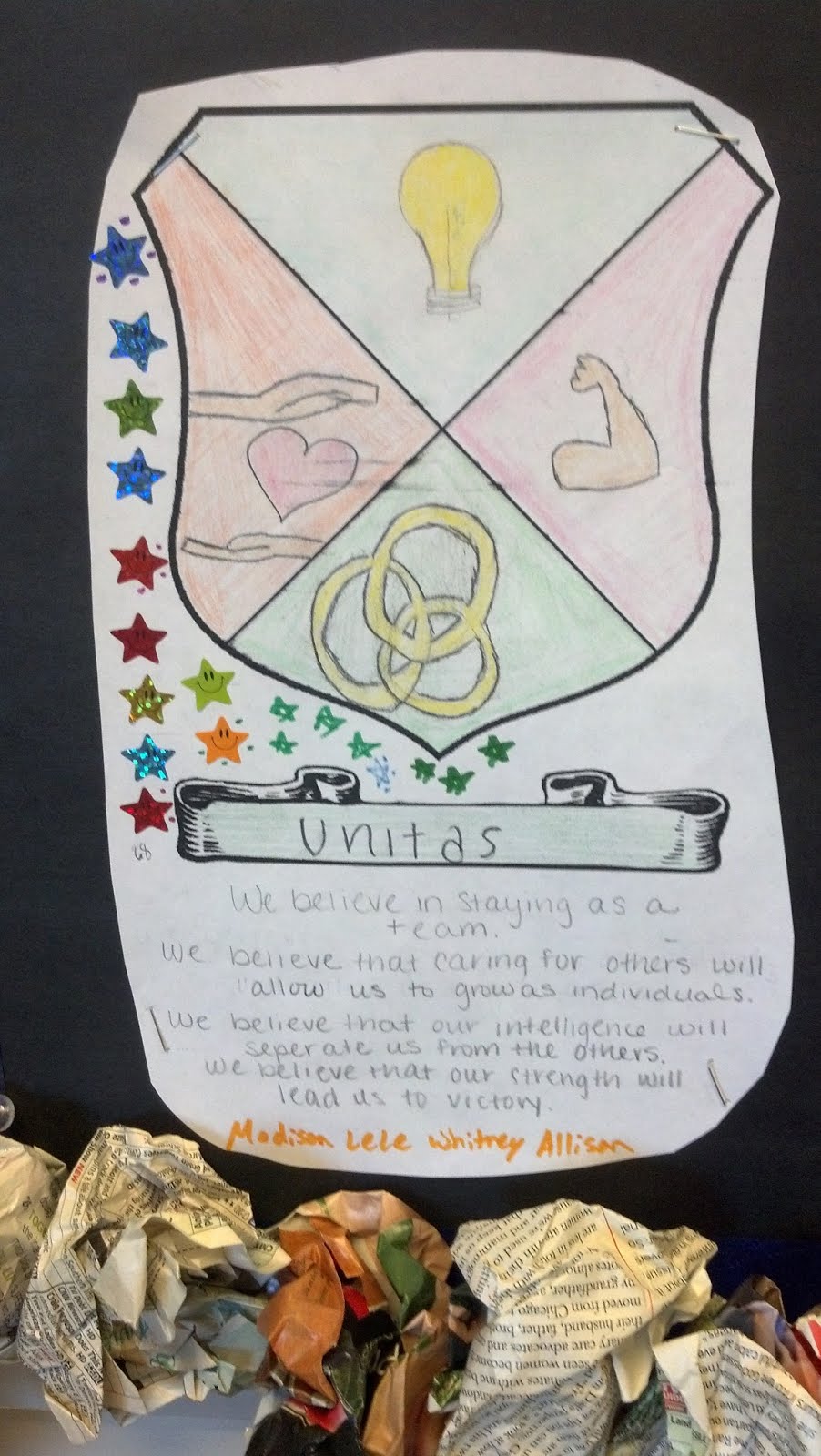
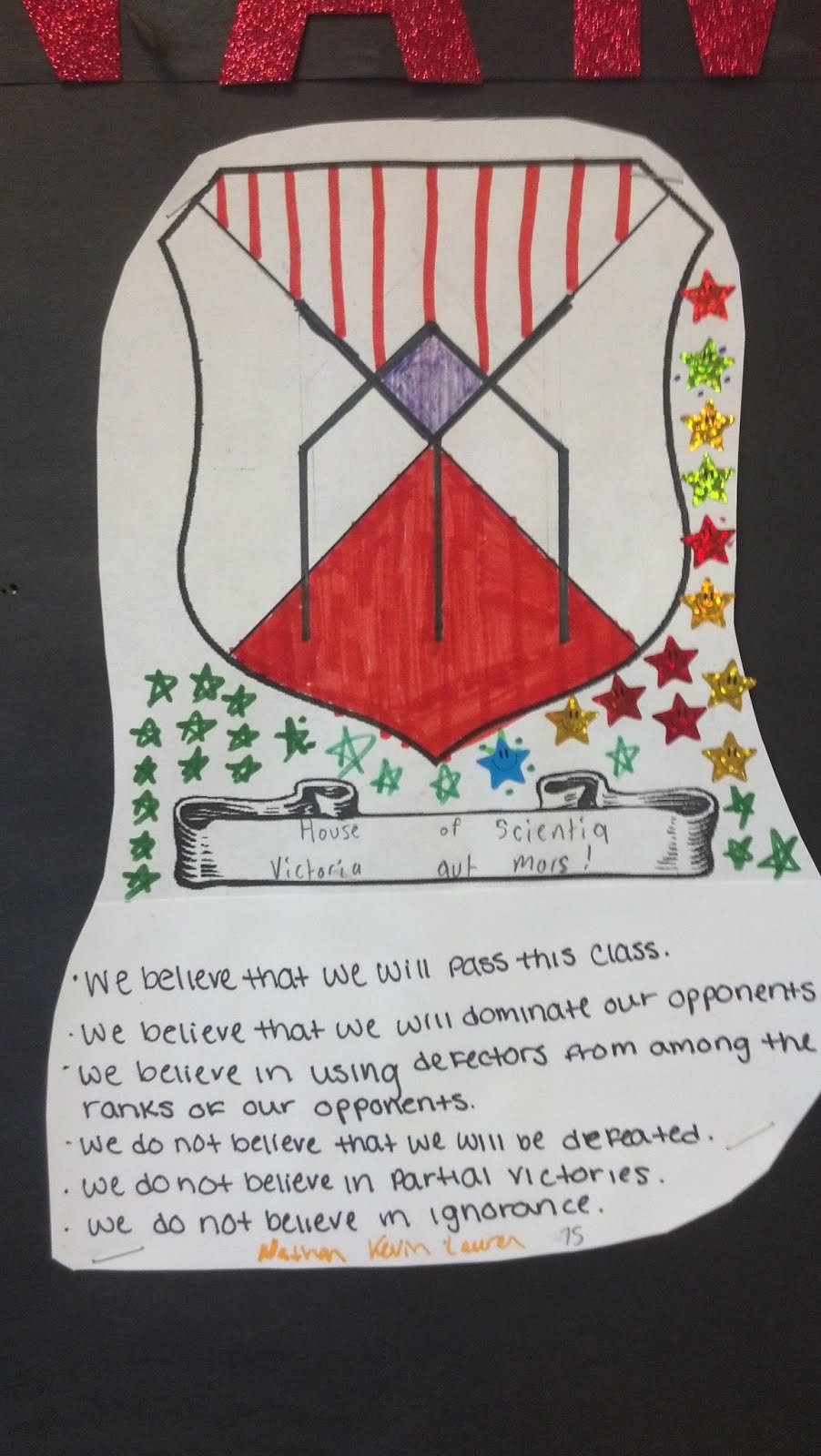
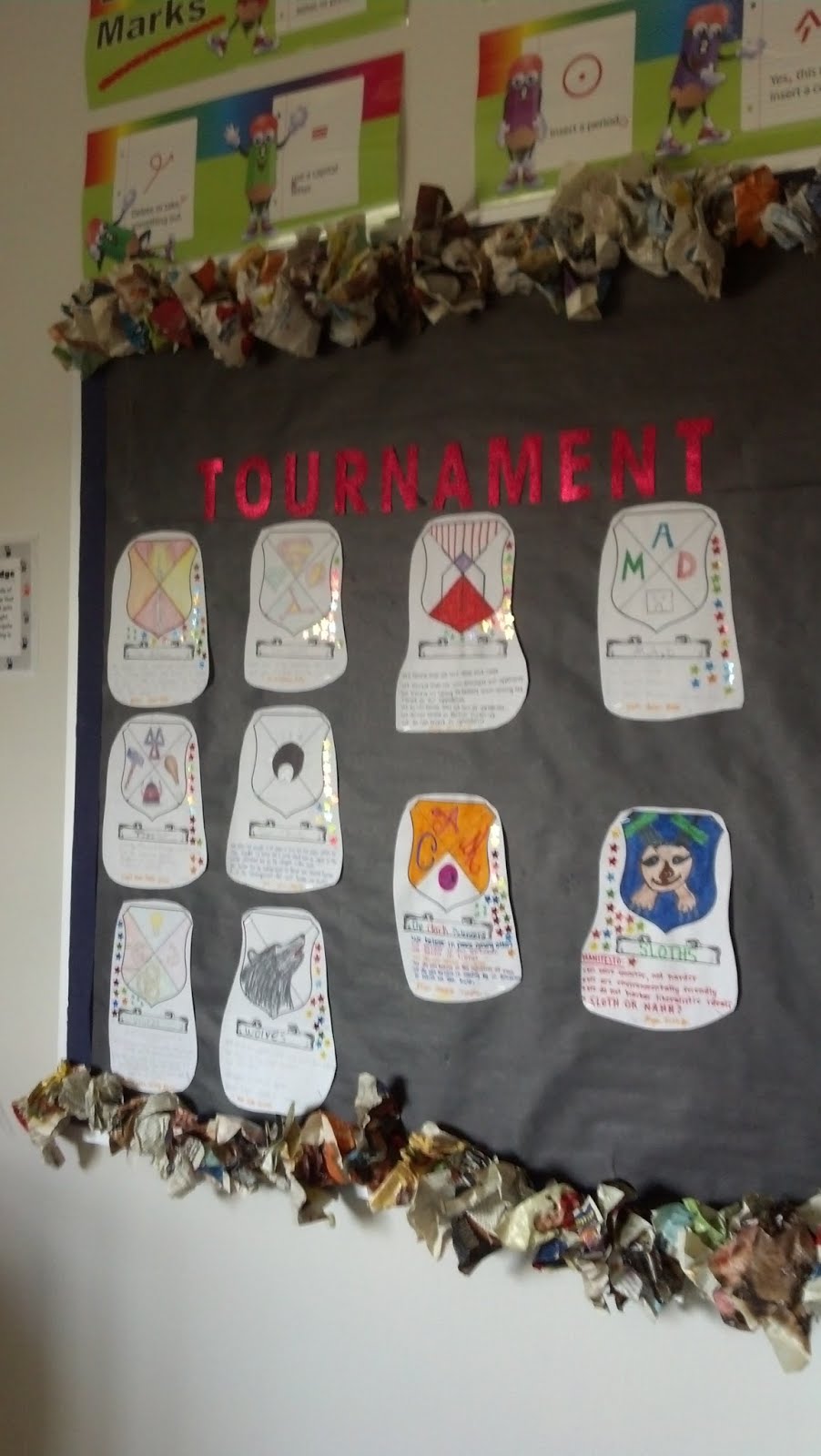
1.   Form Teams: During the first three days of class, students get to know one another and then form teams.  Teams then work together to create a coat of arms and to write a manifesto. (We used the ones from Veronica Roth’s Divergent series as examples.)  The completed team “shields” and manifestos are attached to a bulletin board at the front of the room.    


IMG_20140320_163118_255.jpg  IMG_20140326_092633_958.jpg  IMG_20140326_092711_696.jpg

2.   Earn Points and Set a Goal: Teams begin earning points in the tournament by correctly completing warm up challenges like word puzzles, critical thinking challenges, and the like.  Students are made aware of the tournament prize: the top ranking team at the end of 9 weeks will receive a pizza party which they may choose to share with one of their allies, if they wish.


3.   Use ClassDojo: At the end of the first week, I introduce ClassDojo.  Students are permitted to log on and change their avatars to suit their tastes, and we play around with the program to see and hear what earning and losing points sounds like.


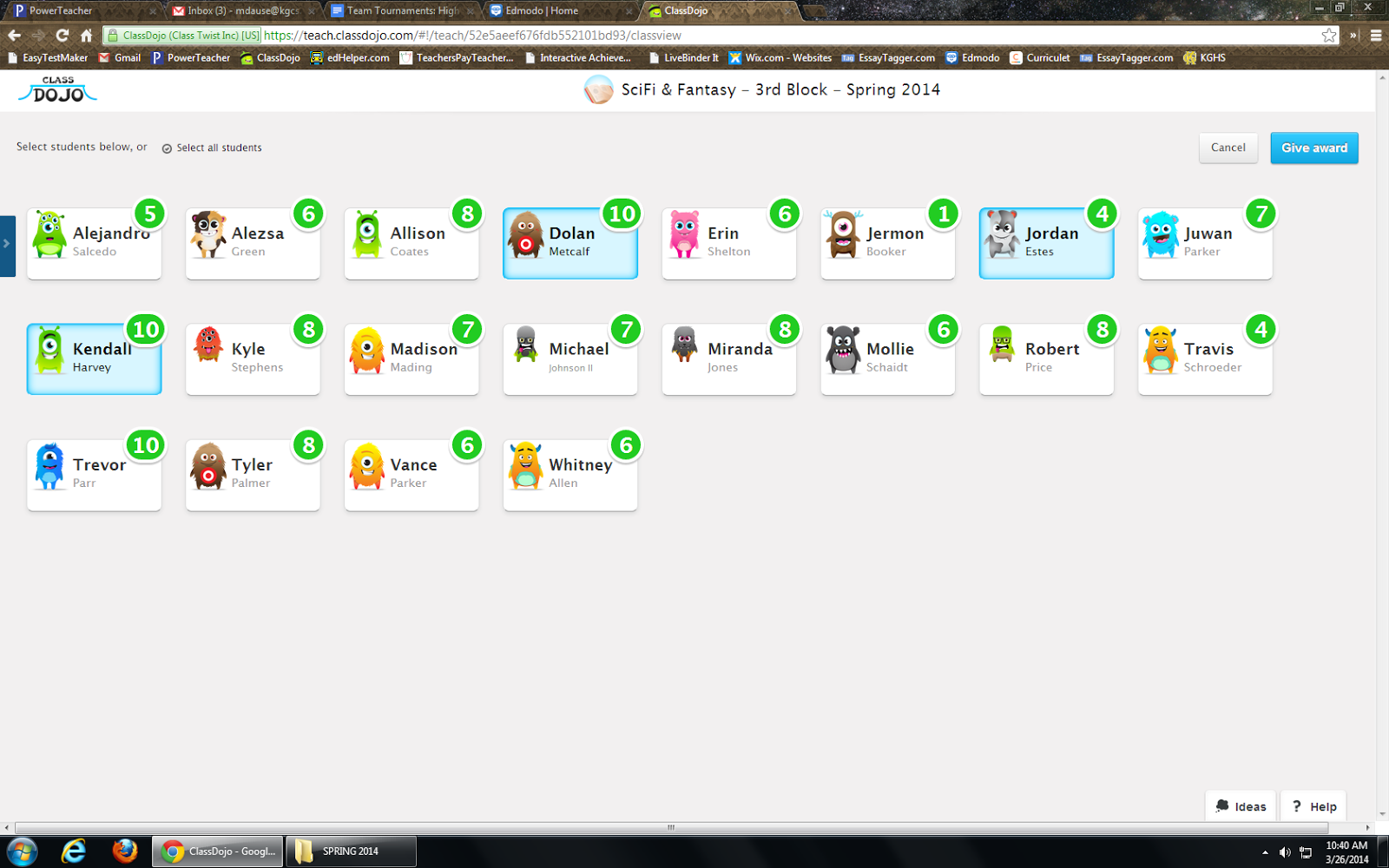
4.   Utilize competition/positive peer pressure: From the second week onward, I enter points in ClassDojo while students work on in-class assignments and projects.  Every other day or so, I display the “points board” so that students may see how many points they (and their teammates) have earned.  This usually leads to some good-natured nagging from team leaders and members, who push each other to do better and earn more points without any instruction from me to do so.


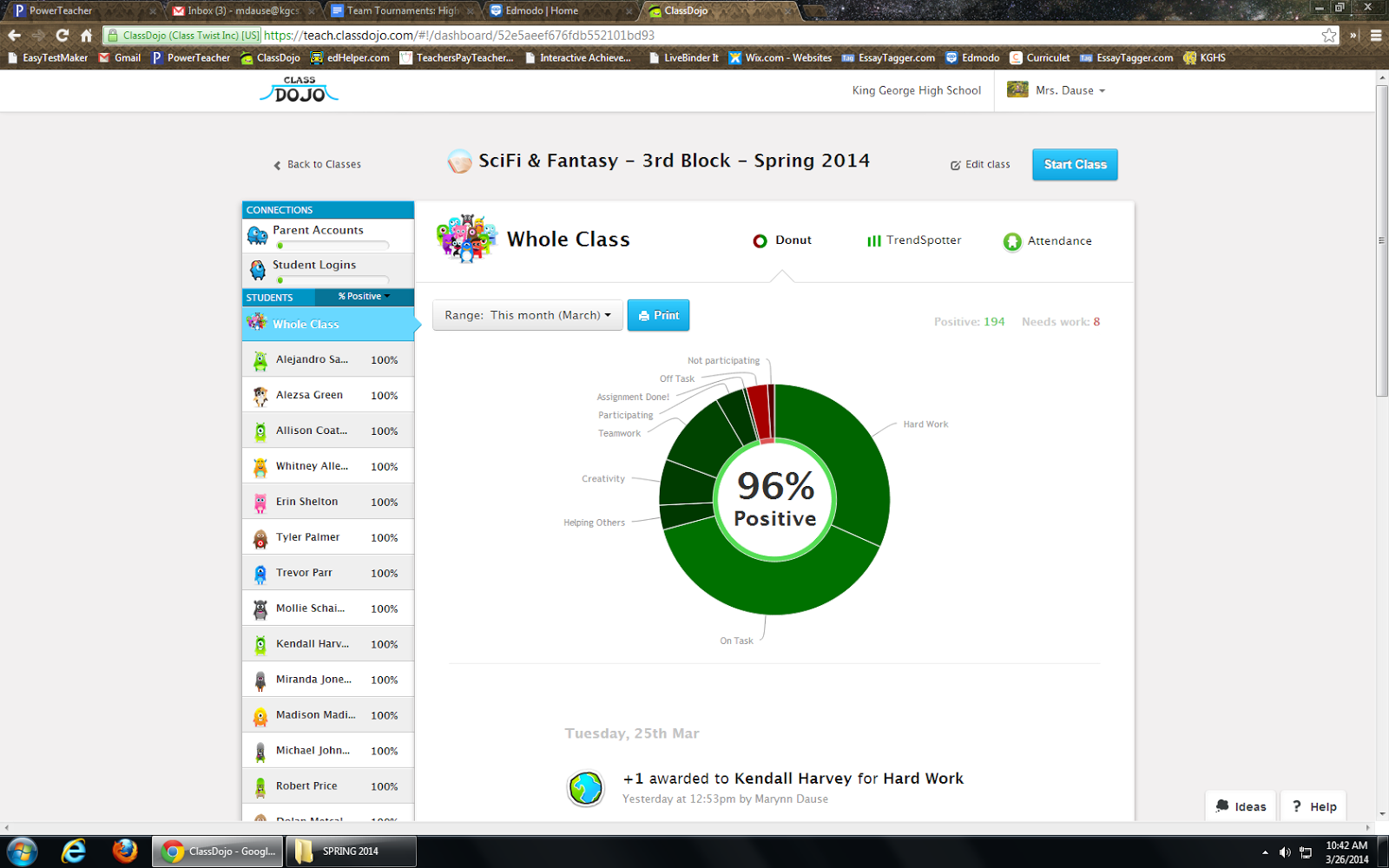
5.   Total points: At the end of each week, I total the points earned by the members of each team and award stickers to represent the progress made that week.  In the screenshot below, for example, the members of a student team called “Tiza” have earned a combined total of 24 points.  With stickers representing 5 points each, that’s 4 stickers plus 4 tick marks on the team’s shield.  


When students come to class on Fridays, they know that all of the team shield totals will be up to date, and that gets them extraordinarily excited for…


6.   Head to Head Challenges: This is our chance to be silly together, as well as incredibly competitive.  On Fridays, the team that is in the lead challenges one other team to a head to head competition.  The rules for our class are that each team must send up one representative (sometimes I let them send up two, or call for help from a team they choose as an ally that week), and no student may compete in a Head to Head two weeks in a row.  Head to Heads are worth anywhere from 10-30 tournament points for the winning competitors’ teams.  Also, the teams never have any idea what the challenge will be.  I try to switch back and forth between mental and physical challenges, so one week might be a Jeopardy or Family Feud-style contest, while the next week might be thumb wrestling, hula hooping, or a staring contest.  We play games from Whose Line Is It, Anyway? and do silly stunts from Jimmy Kimmell Live.  The kids LOVE it, and I really think that it is the Head to Heads, more than the promised pizza party, that keeps them engaged with earning points on Dojo during the week.  Of course, you could make your Head to Head challenges address specifically academic content; I would still suggest adding a large dose of “silly” or “game” to those curriculum-driven contests, though.  Students of all ages will go a mile in exchange for an inch of teacher-encouraged silly or fun time.  (Just make sure they go the mile before rewarding them with the inch!)


7.   Ultimate Reward:  At the end of the nine weeks, I do follow through with my promise of a pizza party during lunch for the winning team and their chosen ally.  Limiting the number of students who are directly rewarded maintains the competitive drive for the rest of the semester (we reboot the tournament in the middle of the semester with new teams and different types of challenges), and it also saves me a good bit of cash.  The key, though, is to manufacture the amount of points available to be earned each week and especially the number of points earned in Head to Heads so that every team has a fair shot and winning up until the very last few weeks of the tournament.  Students will always know exactly who’s in the lead, but it helps keep them interested in the competition if they know that there will be a chance for them to “rebound” and catch up on Fridays.


With the Tournament Team structure in place, it’s very easy for me to motivate my students to do practically everything that is needed in class!  ClassDojo keeps track of points earned over time and provides me with neat charts that show general trends in the classroom, so I’ve been able to watch our classroom behavior and engagement patterns trend upward as the Tournament continues.  At this point in the semester, I almost never have to “write up” or punish students in these classes; a pointed look towards their team shield is usually sufficient to get their attention, and they absolutely hate hearing the “down” sound from ClassDojo when they lose a point.  It’s revolutionized my experience of classroom management, making me much more confident in myself as a “game master” and optimistic about spending time with each of these classes, and I hear the students talking in the hall about what they’re going to do today “to get more of those points.”  You might say gamification + ClassDojo + pizza = Finally enjoying the toughest part of my job.


I'd like to thank Mrs. Dause for sharing her expertise with my readers.  You, too, can connect with her on Edmodo and her website. 


Saturday, February 22, 2014

Shall We Play a Game (& Learn)?

Since chatting with Tom Driscoll via Google Hangout and Brian Germaine at the EdSurge RIDE event in the Fall, meeting up with Chris Aviles at Techspo14, viewing Mr. Lewis' Edmodo Webinar on Gamification, and engaging with my #TeamMAITs in class, I'm intrigued by the didactic nature of games. I've been thinking about how to use gamification with my students to restructure the learning activities to mimic aspects of a video game that encourage student involvement in the classroom.  Using a simplistic approach, I decided not to go full tilt with a backstory and XP spreadsheets and instead tried this out by first changing how I deliver content to the students. Because gamification promotes blended-flipped learning, behaviorism conditioning techniques and self-paced instruction, I'm hopeful that this instructional design will help meet the needs of some of my lower-level, reluctant learners.

Deploying a combination of 1:1, BYOD, and paper-based activities, I am able to give my students an opportunity to pace themselves through the levels. Scheduling consistent time in the computer lab, 3 days a week throughout the unit we are 1:1 with Chromebooks and computers. But keep in mind, while the students are allowed to go at their own pace within the window I give them, they do not have to work alone. Even when in front of the computers, my students discuss the material and engage with each other. The other two days a week, we are in the classroom using BYOD for group and teacher-led activities.

Instructional Game Design

In Edmodo, I created a separate group exclusively for our Greek Mythology and Odyssey Unit. On the main newsfeed, there is one welcoming message that provides an overview of the design and unit. All of the subtopics for the unit are organized in individual small groups, of which all of my students are members of. I also have all groups set to read-only. Students will access resources and assignments in the small groups, but all discussions and sharing of their work will take place in our original class group. Students can only see the small groups they have completed or are currently in. As students successfully complete the tasks of one group, I "unlock" and add the students to the next small group--my version of "leveling up". 

Take a look at this screencast to see the group set up:


I think this is an effective design because the students won't get lost scrolling through the myriad of posts that appear on our ever-updating class newsfeed. All content is organized by subject/keyword, so if a students needs to refer to resources on the gods and goddesses of Greek Mythology, they simply go to that small group and see the 5-10 items listed on the newsfeed. Organization and archiving of resources is much more manageable than trying to rifle through a three-ring binder or online folders. 

Also, I like this design because I will have student performance organized by topic/unit.  I see very quickly how well a student performs in this particular unit, as opposed to my district gradebook which keeps a running tally of all grades for the marking period. I can also use the Edmodo gradebook as my leaderboard for the "game". 

I'm considering setting up all of my units for next year using this "game" design with each unit having its own Edmodo group, and as I become more proficient I can incorporate more gaming techniques.

Behaviorism is a Game

Video games are behaviorism in action. We've all felt the addictive pull of playing a video game: look at the popularity of games such as Candy Crush, Plants vs. Zombies, Fruit Ninja, and systems such as Xbox, Wii, and PlayStation. We are bombarded with positive and negative reinforcement every time we play: extra points, bonuses, difficult levels, and the thrill of success. So attempting to mimic these elements, I use badges, positive comments, and quick tasks to encourage students to "level-up" to the next small group.


In Edmodo, I created badges specific to the Odyssey unit and award them as students perform. I am surprised at how badges positively reinforce the students-- they keep doing more to get more badges. I can barely keep up with them! Some badges are awarded for completing a level, other badges are awarded for behavior (helping others, quick problem solving, etc.). Luckily badge making in Edmodo is very simple and adding badges to a group is even easier. I'm torn though: I'm glad that my students are motivated, but I wish that they weren't so externally motivated. Then again, you can't have intrinsic motivation if you are told to do it.

Since the tasks in each group take about 15-30 minutes maximum, students can quickly level up after demonstrating proficiency. This was a big tip from Tom Driscoll: in order to keep students hooked, they should be able to "level up" quickly. So rather than cramming a bazillion assignments in each group, I created more groups with few assignments in each. This also helps to keep me on track with grading. I have caught myself procrastinating on grading big assignments because they take so long to grade, but with smaller assignments, I too can feel the success of leveling up and completing a task because I can grade a set of small assignments quickly adding positive and constructive comments as needed. By increasing the frequency of completion, we all receive the positive reinforcement more often.

I will agree that gamification seems gimmicky, but keep the notion of the game in mind. How many levels are in Candy Crush? How many can you get through in one sitting? And what happens when you can't get through a level quickly? Yup, you use up all of your "life," get bored and walk away from the game. But progress quickly and you find enjoyment playing. But I can't help wonder: Do we play the game because we want to, or do we keep playing the game because we've been conditioned to? 

I'm still figuring this out as I go, and I have lots of room for improvement both in design and execution. Look for some more posts on this topic and my students and I continue our quest. If you have any tips, tricks, or best practices, please share!